SpaceX Acquires xAI: Elon Musk Merges His AI and Space Empires
The silicon-dense landscape of Northern Virginia and the energy-hungry clusters of Dublin are reaching a physical breaking point, prompting a strategic shift in perspective that looks far above the atmosphere. On February 2, 2026, Elon Musk announced the formal merger of his aerospace giant, SpaceX, and his artificial intelligence venture, xAI. This acquisition marks a pivot from terrestrial-bound large language models to a future where the most powerful compute clusters in existence reside in low Earth orbit.
According to official updates from SpaceX, this merger aims to create a vertically-integrated innovation engine that combines rocket technology, satellite internet, and real-time AI processing. The move addresses a looming crisis in the tech industry: the inability of terrestrial power grids to sustain the exponential growth of AI training and inference.
The Terrestrial Bottleneck
Current AI advancements are tethered to massive land-based data centers that consume immense amounts of electricity and water for cooling. As global demand for compute continues to skyrocket, the strain on local communities and the environment has become a significant hurdle for growth. SpaceX and xAI argue that global electricity demand for AI cannot be met on Earth without imposing severe hardships.
The solution, according to the merger announcement, is to move these resource-intensive efforts into space. By deploying orbital data centers, xAI can harness near-constant solar energy without the atmospheric interference or cooling requirements found on the surface. In the vacuum of space, heat management and power acquisition follow a different set of physics, one that Musk believes will eventually make space-based compute the most cost-effective option for the industry.
Starship as the Logistics Backbone
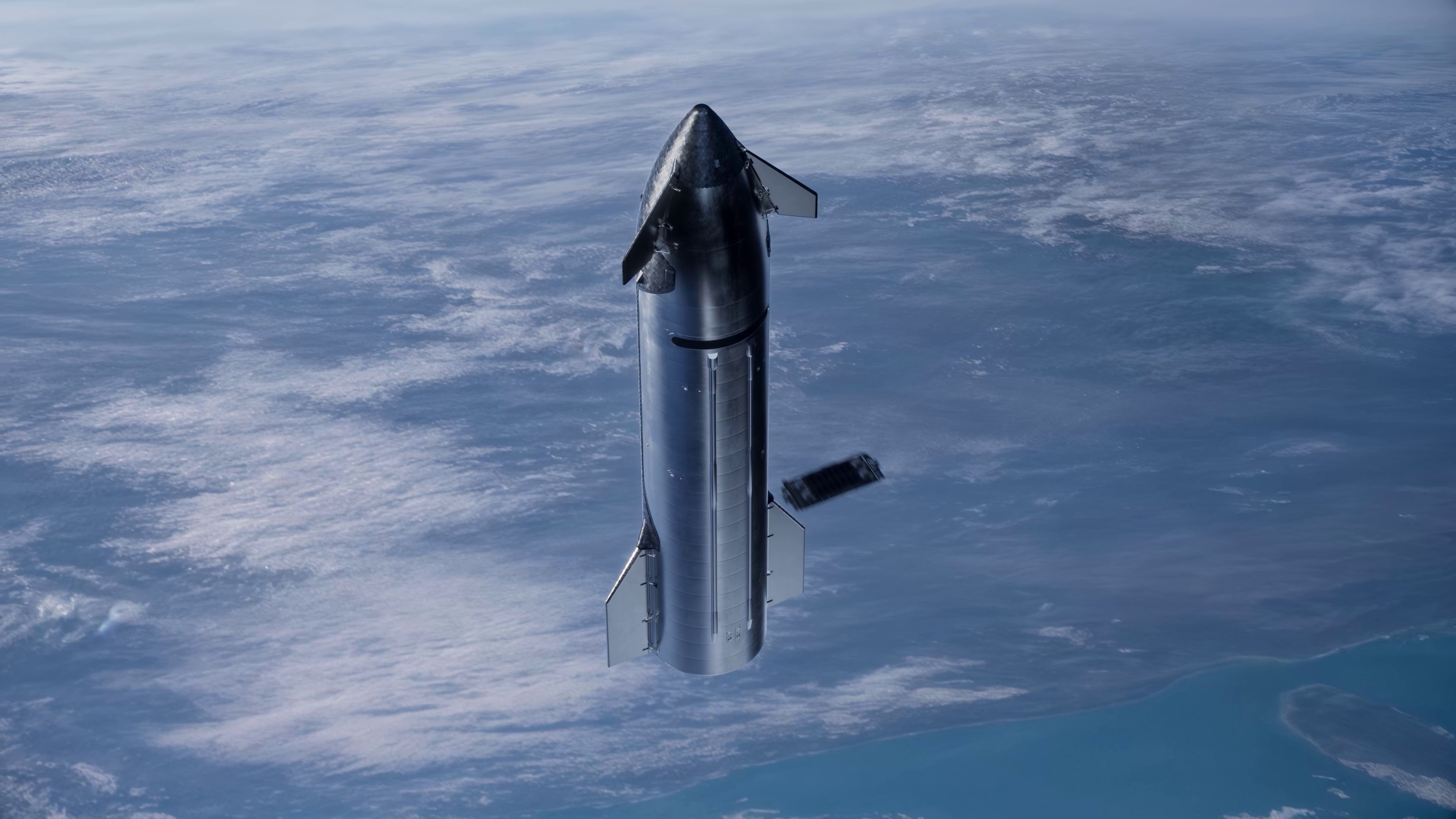
The feasibility of this vision rests entirely on the Starship launch system. For decades, the high cost of putting mass into orbit made the idea of a “space data center” a fantasy. However, SpaceX’s transition to the Starship V3 platform has changed the math. While the Falcon program proved that reusable rockets could lower costs, Starship is designed to launch megatons of mass annually.
Musk estimates that within two to three years, launching AI satellites will be the most efficient way to generate compute capacity. The goal is to launch approximately one million tons of hardware per year, with each ton generating 100 kilowatts of compute power. This would add roughly 100 gigawatts of AI capacity to the global pool every year, eventually scaling to a terawatt per year. These satellites will operate as a decentralized, orbital supercomputer, providing low-latency, high-bandwidth AI services to billions of users via the existing Starlink and direct-to-mobile infrastructure.
SpaceX has acquired xAI, forming one of the most ambitious, vertically integrated innovation engines on (and off) Earth → https://t.co/3ODfcYnqfg pic.twitter.com/el40rCUBGe
— SpaceX (@SpaceX) February 2, 2026
Scaling Toward a Kardashev II Civilization
The merger does not stop at Earth’s orbit. The long-term roadmap involves using lunar resources to manufacture and deploy even larger compute constellations. By establishing factories on the Moon, SpaceX aims to use electromagnetic mass drivers to launch satellites into deep space without the gravity-well penalties associated with Earth launches.
This strategy is framed as a step toward becoming a Kardashev II-level civilization, a theoretical society capable of harnessing the total energy output of its parent star. By placing compute clusters closer to the Sun, xAI intends to capture a non-trivial percentage of solar power to fuel the training of increasingly complex models. This infrastructure is designed to be the foundational layer for future settlements on Mars and beyond, ensuring that the “light of consciousness” is supported by a robust digital backbone.
One Team 🚀https://t.co/8RWbk5jQIQ
— xAI (@xai) February 2, 2026
What to Watch Next
As SpaceX begins the integration of xAI hardware into its Starlink V3 launches, several factors will determine the success of this orbital pivot. First, the industry will be watching for the first “live” training runs conducted entirely on a satellite cluster. If xAI can demonstrate lower latency or higher throughput than terrestrial competitors, it could trigger a new space race among big tech firms.
Second, the regulatory landscape regarding space debris and orbital traffic will become even more complex. SpaceX has noted that these satellites will follow established sustainability designs, including end-of-life disposal, but a million-satellite constellation represents an unprecedented level of orbital density.
Finally, the focus will shift to the Moon. If SpaceX can successfully demonstrate in-space propellant transfer and land cargo on the lunar surface, the path toward lunar-based manufacturing will move from a theoretical white paper to a tangible engineering project. For the AI industry, the frontier has officially shifted from the server room to the stars.